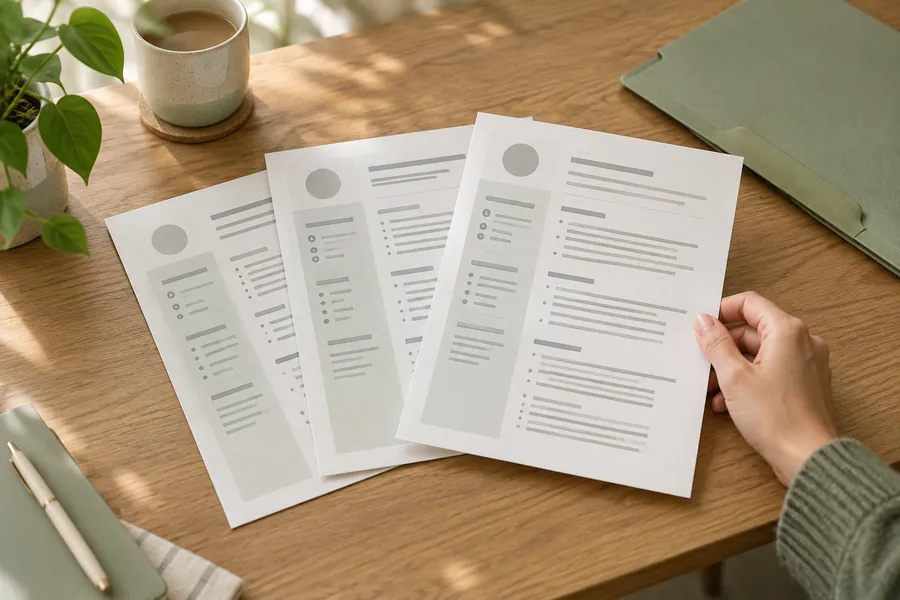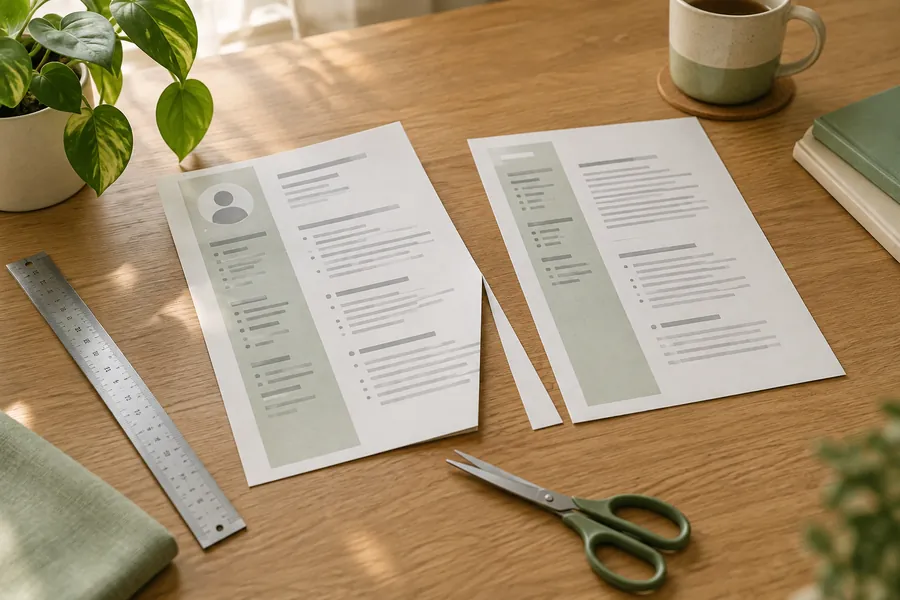
The useful question is not simply whether a CV should have one page or two. It is how much space you need to present relevant evidence clearly for this application. The employer's explicit limit comes first. After that, consider your career stage, occupation and application market. Canada's Job Bank recommends limiting a resume to two pages, but that guidance should not be treated as a universal law for every country or document type. This guide covers ordinary job-application CVs and resumes. Academic or research applications may ask for a different, fuller record.
Start with instructions, not a page target
Read the vacancy and application guidance before editing. Some employers request a particular length or form, while others leave the choice open. A requested two-page maximum means you need to select evidence within that space. A form asking for a complete employment history is different from a concise CV. Do not omit required information because an online article recommended one page. If the instructions are unclear, look for the employer's recruitment guidance. Treat examples from other organisations as suggestions, not authority over the vacancy you are answering.
Let relevance decide what stays
Make a list of the role's important requirements and identify where your document supports each. Material that directly supports a requirement has a stronger claim on space than repeated descriptions of routine work. A fictional procurement applicant might keep a detailed recent bullet about checking supplier quotations, but shorten an old student job to a line. That does not mean the older work was unimportant. It means the CV is a selected account for a particular purpose. Keep a fuller private record so shortening the application does not erase your own career information.
Remove repetition before removing evidence
Read the opening profile, skills section and experience bullets together. If all three say "excellent customer service" without adding different information, the document is spending space on the same claim. A short skills label can point to a detailed example, but it should not reproduce the whole example. Similarly, five roles do not each need the same paragraph about answering calls. Explain the most relevant responsibility where it adds context, then use other bullets to show different work or development. Repetition can make a long CV feel less substantial than a shorter, better selected one.
Compress older roles carefully
Older experience can be brief when it is less relevant, but do not alter dates or create a misleading timeline. You might use an Earlier Experience section with employer, title and dates, then add a short description only where useful. If an older role contains your strongest evidence for a career change, keep that evidence visible rather than cutting it purely because it is old. Canada's Job Bank recommends placing emphasis on recent experience and minimising older detail. Apply the underlying principle of useful emphasis, while considering what the new employer actually needs to understand.
Give current work enough room
A highly compressed CV can hide the information that makes you qualified. "Manager, 2022-present" tells the reader little about the kind of team, work or responsibility involved. Add selected bullets that explain scope and contribution. If that requires a second page and the employer permits it, a readable two-page document may be better than a crowded single page. Do not add a second page merely to include a long interests section or general claims. Length should follow useful content. Each page needs to help the employer assess your fit.
Do not solve length with tiny text
If the only way to fit is to shrink the font and remove every gap, reconsider the content. The National Careers Service advises clear fonts, readable sizing and consistent style. The exact result depends on the typeface and document, so inspect the exported file rather than relying only on a number in the editor. Check whether you can read it comfortably at ordinary viewing size. A cramped page can make the reader work harder to find strong evidence. Cut weak sentences before sacrificing the readability of facts that matter.
Use bullets with a purpose
A bullet should usually communicate one clear contribution or closely connected action. Consider "Assisted with administration, reports, bookings, data, events, meetings, filing and customer communication." It names many tasks but explains none. Select the ones relevant to the vacancy and give concrete context. A fictional events assistant might write "Maintained the attendee list and checked booking changes before sending the final count to the venue." That sentence is longer than a label but more useful. The editing goal is not the fewest words at any cost. It is the most useful information in readable space.
Review page breaks deliberately
Open the final export and check where sections split. Avoid leaving a heading alone at the bottom of a page or separating a job title from all its evidence. Check that the second page is not mostly empty because of a stray paragraph break. Do not fix every break by removing important content; adjust spacing sensibly and then review again. A text-based document should remain easy to select and copy if you are applying through a portal. Follow file instructions and keep a clearly named final copy separate from the editable master record.
Try a deletion test
For each paragraph or bullet, ask what the employer would lose if it disappeared. If the answer is only a repeated claim, delete or shorten it. If the answer is proof of a requirement, keep it and improve its clarity. Ask a second reader whether the CV gives enough context to understand your background without a spoken explanation. Do not ask only whether the page looks tidy. A useful length balances completeness for the task with selection. Your CV is finished when the required information and strongest evidence are clear, not when it reaches a fashionable page count.
Sources and scope
Original general guidance informed by careers resources. Reviewed 10 October 2026. Employer instructions and local expectations take priority. No interview, hiring or ATS result is guaranteed.
Put it into practice.
Write a first draft in your own words, then review it carefully.
Start your CV ↗